
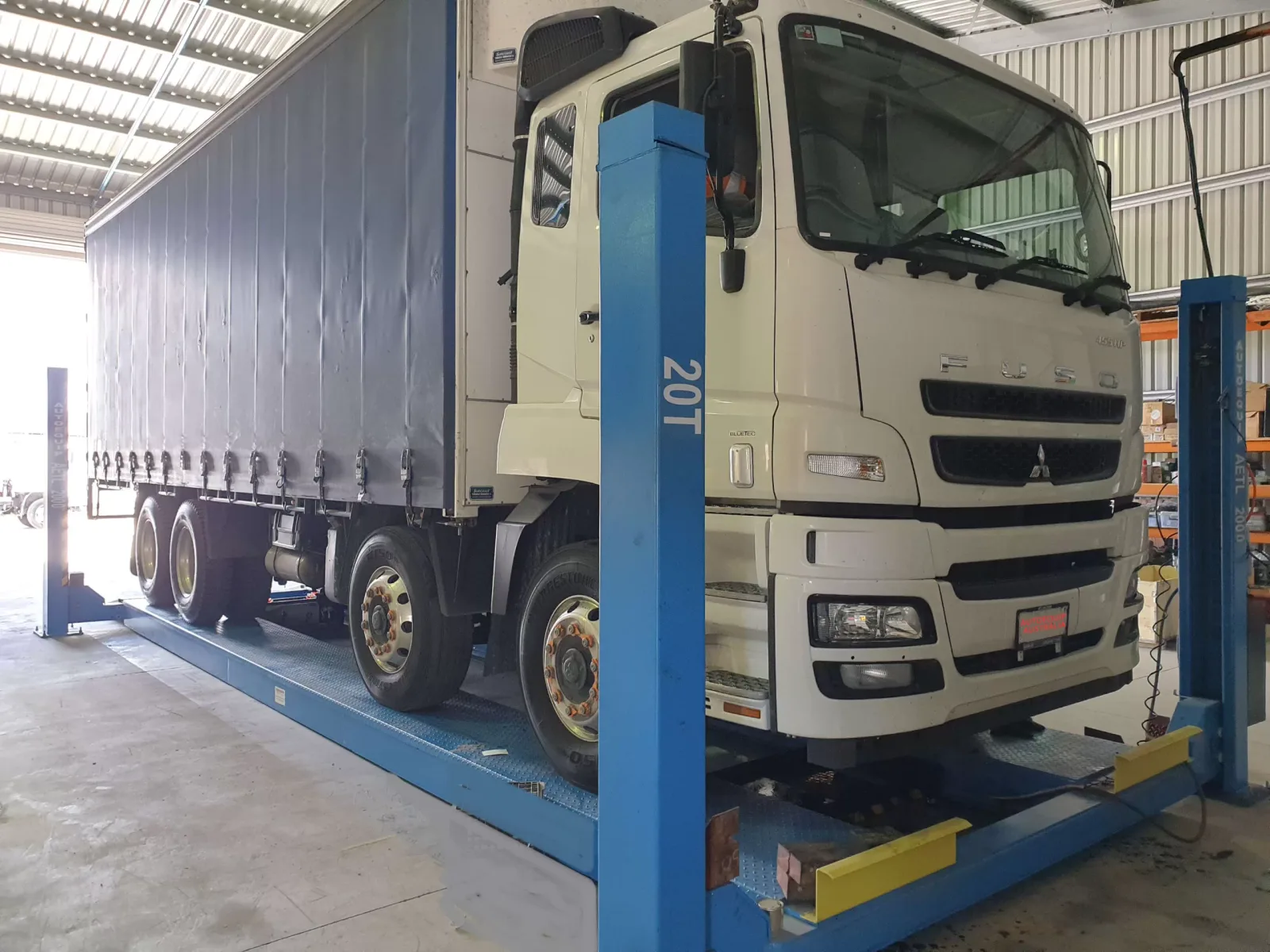
Four post Heavy Duty 20 tonne truck lift
A 20-tonne (20T) four-post lift is a heavy-duty commercial vehicle hoist engineered to elevate massive fleet assets, including multi-axle trucks, commercial buses, agricultural machinery, and heavy construction vehicles. At this high-capacity tier, these lifts feature specialized structural engineering, powerful drive systems, and multi-layered safety mechanisms to handle immense structural stress safely
Description
A 20-tonne (20T) four-post lift is a heavy-duty commercial vehicle hoist engineered to elevate massive fleet assets, including multi-axle trucks, commercial buses, agricultural machinery, and heavy construction vehicles. At this high-capacity tier, these lifts feature specialized structural engineering, powerful drive systems, and multi-layered safety mechanisms to handle immense structural stress safely
1. Structural Architecture & Dimensions
To safely support 20,000 kg (approx. 44,000 lbs), these hoists swap standard consumer-grade materials for massive industrial framing:
- Extra-Wide, Single-Piece Runways: The tracks feature continuous, non-welded steel beams spanning up to 8 meters (approx. 26 feet) in length to manage extended wheelbases safely. Platforms are notably wider to accommodate wide-track dual-wheel rear commercial axles.
- Rigid Post Wrap-Around Construction: Columns are built out of laser-cut, high-tensile structural steel that completely wraps around the cross-beams, eliminating side-to-side sway under off-balance load distributions.
- Low Approach Profile: Features elongated heavy-duty approach ramps and built-in roll-off protection plates to handle heavy vehicles with low ground clearance smoothly.
2. Drive & Mechanisms
Industrial 20T lifts generally rely on one of two heavy vehicle drive platforms:
- Hydraulic Cylinder & Dual Chain/Cable Drive: Driven by a high-output 4.0 kW to 4.5 kW electric motor typically drawing 380V three-phase power. An under-runway horizontal hydraulic cylinder pulls heavy synchronization chains or high-tensile steel equalizer cables through corner pulleys to keep the platform level.
- Mechanical Screw Drive: Some heavy-duty 20T variants utilize a synchronized mechanical screw-up system, which naturally prevents fluid leaks and provides absolute physical locking at any given height.
- Performance Metrics: Expect a swift average lifting time of ~50 to 60 seconds to reach a maximum lifting height of roughly 1.7 to 1.85 meters .
3. Comprehensive Safety Systems
Safety is paramount when suspending a 20-tonne vehicle in the air. These machines integrate multi-layered redundancies:
- Automatic Mechanical Lock Ladders: Laser-cut multi-position locking ladders are built inside each column. As the hoist ascends, it clicks into safety stops roughly every 4 inches.
- Slack Cable/Chain Protection: Outfitted with limit-switch safety sensors. If a cable loses tension or an obstruction causes the lift to incline slightly, the power unit immediately shuts down to prevent tilting.
- Pneumatic Single-Point Control Release: Employs a quiet air-actuated lock release controlled from a single centralized console, allowing technicians to clear locks simultaneously before lowering the hoist.
- Chain/Cable Break Safeguards: Explicit anti-rupture safety mechanisms lock the cross-rails in place instantly in the event of an absolute chain or cable failure.
4. Workspace Customization & Under-Vehicle Access
- Open-Front Design Options: Many 20T models utilize an open-front or crossbeam-free structural design, allowing technicians unobstructed walk-in access under the front axle to easily service truck engines, transmissions, and steering gear.
- Secondary Rolling Jacking Beams: High-end units provide or support an integrated secondary rolling air-hydraulic scissor jack (often rated around 10 to 12.5 Tonnes). This rides between the primary runways, enabling technicians to raise the front or rear wheels completely off the platform for brake and suspension overhauls.
- Self-Lubricating Bushings: Equipped with zero-maintenance, self-lubricating nylon or bronze bushings at high-wear pulley points to minimize operational friction and maximize hoist longevity
Specification
| Specification Category | Parameter | Typical Standard Value |
|---|---|---|
| Technical Parameter | Metric Specification | Imperial Specification |
| Maximum Rated Capacity | 20,000 kg | 44,092 lbs (22 Tons) |
| Maximum Lifting Height | 1,750 mm – 1,900 mm | 68.9" – 74.8" |
| Overall Length (Including Ramps) | 8,500 mm – 9,800 mm | 334.6" – 385.8" |
| Overall Length (Excluding Ramps) | 7,000 mm – 8,200 mm | 275.6" – 322.8" |
| Overall Width | 3,900 mm – 4,300 mm | 153.5" – 169.3" |
| Overall Column Height | 2,400 mm – 2,600 mm | 94.5" – 102.4" |
| Single Runway Width | 700 mm – 800 mm | 27.5" – 31.5" |
| Clearance Between Runways | 1,100 mm – 1,200 mm | 43.3" – 47.2" |
| Drive-Through Clearance Width | 3,400 mm – 3,650 mm | 133.8" – 143.7" |
| Minimum Drive-On Height (Lowered) | 240 mm – 290 mm | 9.4" – 11.4" |
| Electrical & Power | ||
| System Component | Requirement / Rating | Operational Notes |
| Motor Power Output | 4.0 kW – 5.5 kW (5.5 – 7.5 HP) | Continuous-duty industrial motor |
| Electrical Power Supply | 380V – 415V AC | 3-Phase, 50Hz / 60Hz configuration |
| Amperage Circuit Rating | 16A – 20A | Requires a dedicated slow-blow breaker |
| Control Console Voltage | 24V DC | Low-voltage safety system at the push-buttons |
| Hydraulic & Mechanical | ||
| Performance Metric | Operational Standard | Engineering Variable |
| Lifting Time (Full Load) | ≤ 60 Seconds | Based on maximum 20-tonne capacity |
| Lowering Time | 45 – 55 Seconds | Controlled via variable manual descent valve |
| Maximum Operating Pressure | 210 bar – 240 bar (3,045 – 3,480 PSI) | Safety relief valve opens if exceeded |
| Hydraulic Oil Reservoir | 18 Liters – 25 Liters | Premium anti-wear oil (ISO VG 32 or VG 46) |
| Equalization Cables | Ø 14 mm – 16 mm | High-tensile steel wire rope / leaf chain sync |
| Site Foundation & Installation | ||
| Installation Constraint | Minimum Requirement | Structural Tolerance |
| Concrete Thickness | 200 mm – 250 mm (8" – 10") | Must be a continuous, monolithic pour |
| Concrete Strength Class | 3,000 PSI – 4,000 PSI | C30/C37 minimum compressive strength |
| Concrete Cure Period | 28 Days Minimum | Must reach full structural integrity before anchoring |
| Floor Level Tolerance | ≤ 5 mm (0.19") | Maximum allowable slope across column footprint |
| Shop Air Supply | 6 bar – 10 bar (90 – 145 PSI) | Required to actuate pneumatic safety locks |
Related Products
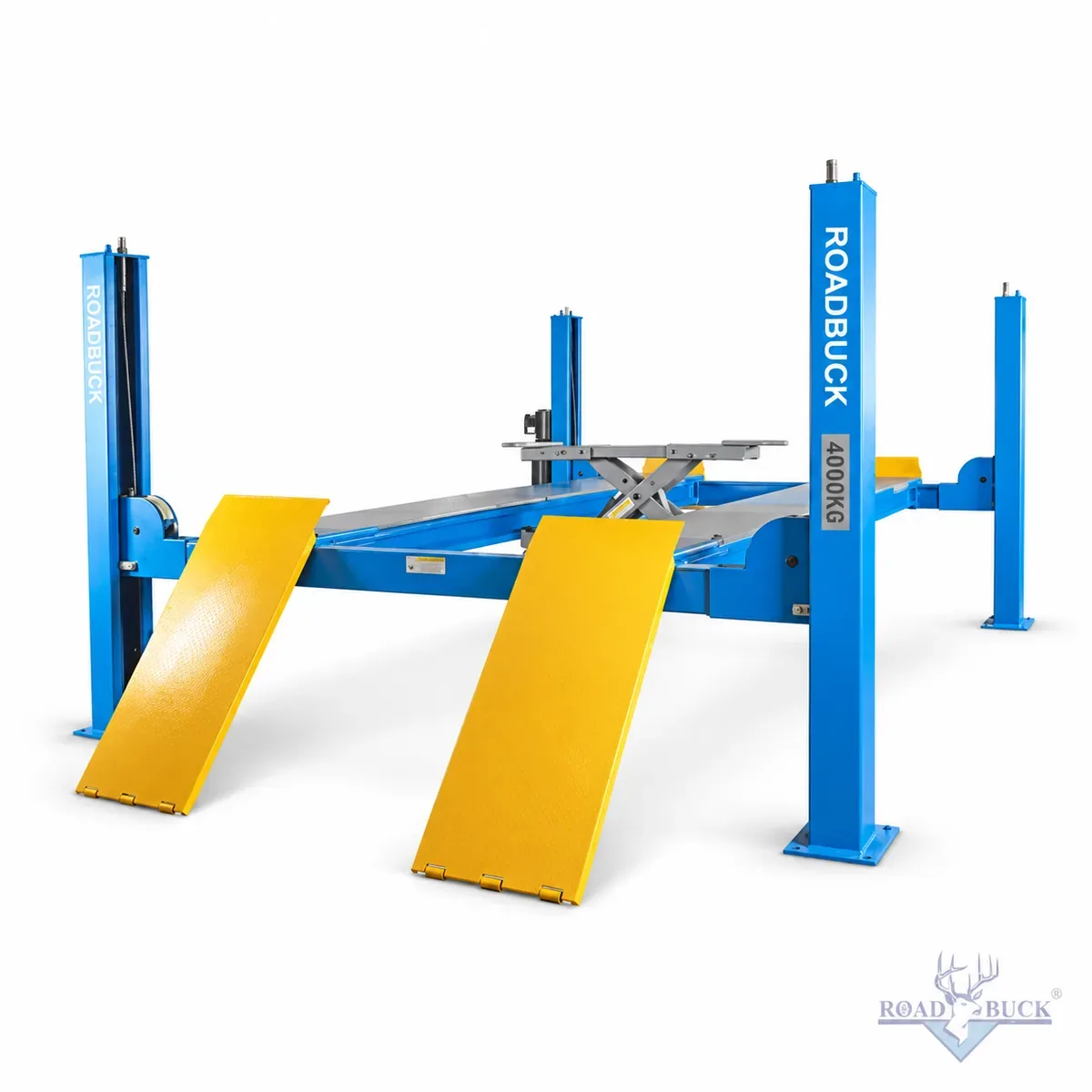
A standard 4.5-tonne (4,500 kg) four-post automotive lift features a heavy-duty electro-hydraulic design built for general servicing, repairs, and wheel alignment in commercial or professional garages
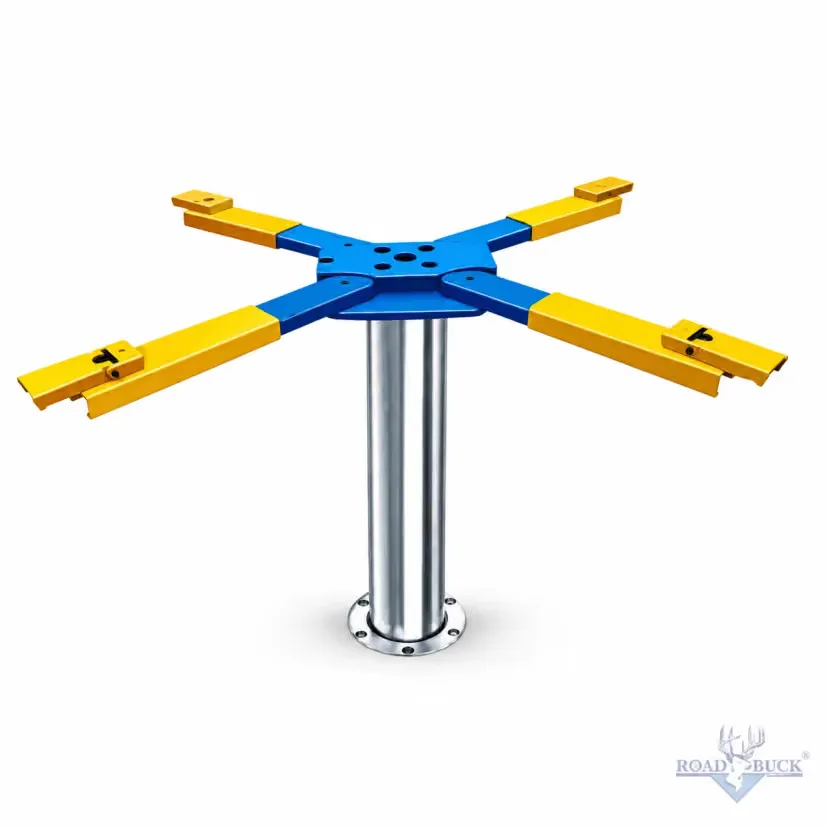
The Roadbuck Single Post Car Lift (Model X-100) is a space-saving, heavy-duty lifting system engineered specifically for car wash under washes, detailing bays, and quick-service operations
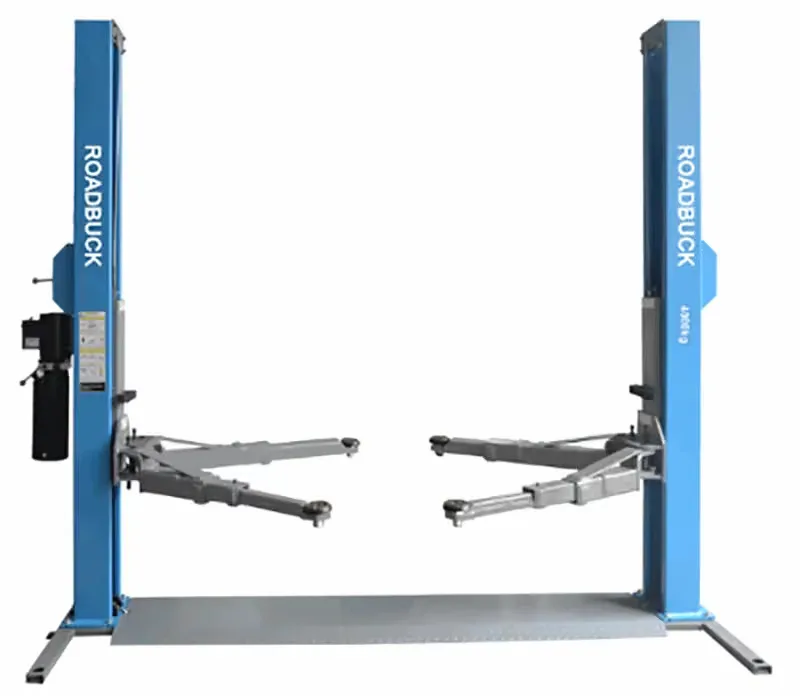
A 5-Tonne (5,000 kg / 11,000 lbs) Two-Post Lift is a heavy-duty commercial workhorse designed specifically to lift large vans, long-wheelbase commercial vehicles, heavy SUVs, and trucks while remaining versatile enough for standard passenger cars.